
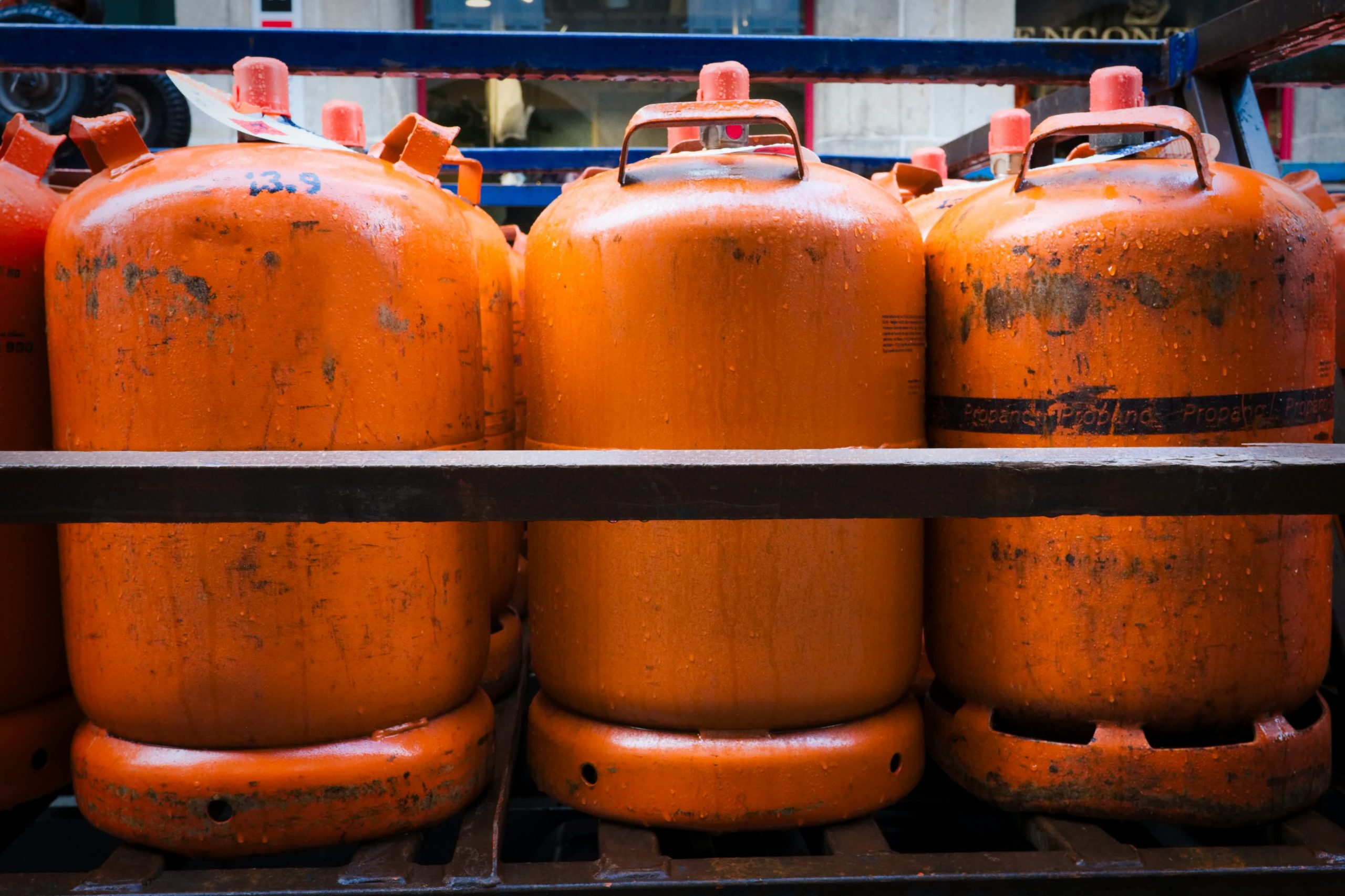
How to Know the Amount of Gas Left in the Cylinder: 7 Easy and Reliable Methods
How to know the amount of gas left in the cylinder is a challenge facing many households. Imagine running out of cooking gas in the middle of preparing a meal, this is just one of those frustrating household experiences almost everyone wants to avoid. Imagine having guests around, preparing breakfast for your family or cooking dinner after a long day, only for your gas burner to stop working unexpectedly. You turn the regulator, check the burner and try again, but there is no flame. Eventually, you discover that your gas cylinder is empty.
The interesting thing is that this situation can often be avoided if you know how to check the amount of gas remaining in your cylinder.
Many people use cooking gas every day without knowing how much is left inside the cylinder. Some rely on the strength of the flame, others shake the cylinder, while some simply wait until the gas finishes before making arrangements for a refill. Unfortunately, these methods are not always dependable.
The good news is that you do not need expensive equipment or specialized technical knowledge to estimate the amount of gas remaining in your cylinder. There are several simple methods you can use at home, including weighing the cylinder, checking the temperature difference on its surface and using a suitable gas level indicator.
In this article, you will discover how to know the amount of gas left in the cylinder, the most reliable methods to use, common mistakes to avoid and practical ways to prevent unexpected gas shortages.
Understanding How Gas Is Stored Inside a Cylinder
Before discussing how to check the remaining gas, it is important to understand what happens inside a cooking gas cylinder.
Liquefied petroleum gas (LPG), commonly called cooking gas, is stored inside the cylinder in liquid form under pressure. When you turn on your gas burner, some of this liquid changes into vapour, which travels through the regulator and hose before reaching the burner.
This explains why a gas cylinder can still contain a considerable amount of fuel even when you cannot see anything inside it.
Unlike water stored in a transparent container, most household gas cylinders are made of solid metal. Therefore, you cannot simply look through the body to determine the remaining quantity.
The amount of gas inside also affects the total weight of the cylinder. This is why weighing is one of the most dependable ways to determine how much LPG remains.
Understanding this basic principle makes it easier to choose the right method and avoid relying on misleading signs.
How to Know the Amount of Gas Left in the Cylinder
There are several ways to estimate the remaining quantity of cooking gas. Some methods are more accurate than others, but they can all help you understand when your cylinder is approaching empty.
Here are seven practical methods worth knowing.
1. Weigh the Gas Cylinder Using a Weighing Scale
Weighing your gas cylinder is one of the most reliable ways to determine how much cooking gas remains inside it.
The principle is simple: the weight of the empty cylinder is known, and any additional weight comes primarily from the gas inside.
Every properly marked cylinder has something called a tare weight (TW). This refers to the weight of the empty cylinder, including its permanent fittings.
You can usually find this marking stamped or written around the upper part, shoulder or collar of the cylinder.
To determine the remaining gas, subtract the tare weight from the current total weight.
The formula is:
Remaining gas = Current cylinder weight − Tare weight.
For example:
Imagine you have a 12.5kg cooking gas cylinder with a tare weight of 14kg.
After weighing it, you discover that the cylinder currently weighs 20kg.
Your calculation will be:
20kg − 14kg = 6kg.
This means approximately 6kg of cooking gas remains inside the cylinder.
The method is particularly useful because it gives you an actual weight rather than relying on guesswork.
How to weigh your cylinder correctly:
- Get a reliable weighing scale that can accommodate the cylinder.
- Check the tare weight written on the cylinder.
- Place the cylinder upright on the weighing scale.
- Make sure it is stable and does not lean against another object.
- Read the total weight displayed.
- Subtract the tare weight from the total weight.
- The result represents the approximate amount of gas remaining.
For better accuracy, use a scale that can comfortably measure the weight of your cylinder.
If your cylinder has removable accessories, make sure you account for them when interpreting the result. The stamped tare weight may not include removable items such as certain protective caps.
This method is also useful when purchasing newly filled gas. You can request that your supplier weigh the cylinder to confirm that the quantity supplied corresponds to what you paid for.
For additional guidance, the Nigerian LPG supplier Newgas explains how to verify LPG cylinder weight and contents.
2. Use the Hot Water Method to Check the Gas Level
If you do not have a weighing scale at home, the hot water method is another simple technique you can try.
It works because the liquid LPG inside the cylinder absorbs heat differently from the empty space containing vapour. This creates a temperature difference on the outer surface of the metal cylinder.
The method helps you identify approximately where the remaining liquid gas is located.
How to use the hot water method:
- Make sure the cylinder is standing upright in a well-ventilated area.
- Obtain some warm or moderately hot water. Avoid boiling water.
- Carefully pour the water down one side of the cylinder.
- Wait a few seconds for the temperature difference to become noticeable.
- Gently run your hand down the outside of the cylinder to identify where the surface changes from warm to cooler.
- The cooler section generally indicates the approximate level of the liquid gas.
The reason this works is that the liquid LPG absorbs heat from the cylinder wall, making the section containing liquid feel cooler than the relatively empty section above it.
For instance, if the temperature changes around the middle of the cylinder, it may indicate that the liquid gas occupies approximately the lower half.
However, it is important to understand that this method does not tell you the exact number of kilograms remaining. It only provides a rough indication of the liquid level.
Important: Do not pour boiling water onto the cylinder, its valve, regulator or hose. Avoid splashing water into electrical connections or other equipment. If you are unsure about using this technique safely, choose the weighing method instead.
3. Install a Gas Level Indicator
A gas level indicator is a device designed to help users monitor the amount of LPG remaining inside a cylinder.
Depending on the type, it may use temperature differences, magnetic sensing or electronic measurements to estimate the gas level.
Some indicators are attached to the outside of the cylinder, while others are designed to work with compatible gas systems.
They are particularly helpful for people who use cooking gas frequently and want to know when to arrange a refill.
Common types of gas level indicators include:
- Magnetic gas level indicators: These attach to the outside of compatible cylinders and help identify changes in temperature associated with the liquid gas level.
- Electronic gas level indicators: These use sensors to estimate the remaining gas and display the information digitally.
- Smart gas monitors: Some advanced models can provide readings through a connected mobile application.
Advantages of using a gas level indicator:
- It reduces the need to weigh the cylinder regularly.
- It makes monitoring more convenient.
- Some models provide early warnings when gas is running low.
- It can help households plan their refills.
- Certain models offer continuous monitoring.
However, not every gas level indicator provides an exact measurement. Some simply estimate the level, and their accuracy depends on the technology used.
Before purchasing one, check whether it is compatible with your cylinder type and whether the manufacturer provides clear instructions.
4. Check the Remaining Gas Through a Transparent Cylinder
Some modern cooking gas cylinders are manufactured using composite materials rather than traditional solid metal.
Unlike ordinary steel cylinders, certain composite models have transparent or partially transparent sections that allow users to see the liquid gas inside.
This makes checking the remaining gas considerably easier.
Instead of weighing the cylinder or using an external indicator, you can inspect the visible liquid level through the transparent section.
Benefits of transparent gas cylinders include:
- You can visually monitor the remaining gas.
- There is less need to estimate the quantity using external methods.
- It becomes easier to recognize when the cylinder is approaching empty.
- Some models are lighter than conventional steel cylinders.
However, not every composite cylinder is transparent. Some have protective outer coverings that limit visibility.
If you are considering purchasing one, confirm that the model actually provides a visible gas-level section.
Also, always follow the manufacturer’s instructions regarding handling, storage and compatibility with your regulator and cooking equipment.
5. Monitor Your Cooking Gas Consumption
Another useful way to know how much gas remains in your cylinder is by monitoring how frequently you use it.
Although this method does not provide an exact measurement, it helps you estimate when your gas is likely to finish.
For example, if a particular cylinder usually lasts your household for 30 days, you can begin paying closer attention when it has been in use for approximately three weeks.
Your consumption pattern will depend on several factors, including:
- The number of people in your household.
- How frequently you prepare meals.
- The type and size of your cooking burner.
- The duration of cooking.
- Whether you use the gas for other household purposes.
- The size of your cylinder.
A simple way to monitor your gas consumption:
- Record the date you install a newly filled cylinder.
- Note the cylinder’s gas capacity.
- Observe how many days it takes before you need another refill.
- Compare the duration across several refills.
- Use the average to estimate when the next refill may be necessary.
For example, if your 12.5kg cylinder regularly lasts 25 days, you can estimate that your household consumes approximately 0.5kg of gas daily.
This is only an average. Your actual consumption may increase when you cook more frequently or prepare meals that require longer cooking times.
Nevertheless, keeping a simple record can help you avoid being caught unprepared.
6. Pay Attention to Changes in the Gas Supply
Changes in the way your cooking gas supplies the burner can sometimes indicate that the cylinder is running low.
For example, you may notice that the flame becomes weaker or that cooking takes longer than usual.
However, this is not a dependable way to measure the remaining gas because several other factors can affect the flame.
Possible causes include:
- A partially blocked burner.
- A faulty regulator.
- A damaged or obstructed hose.
- Poor ventilation around the burner.
- An unsuitable gas pressure or supply problem.
Therefore, do not automatically conclude that your cylinder is almost empty simply because the flame has become weak.
Instead, inspect the appliance safely and use a weighing scale or another suitable monitoring method to confirm the remaining gas.
If you notice a gas smell, hissing sound or suspected leak, stop using the appliance and follow the appropriate emergency safety procedure rather than attempting to diagnose the problem while the system is operating.
7. Use a Suitable LPG Cylinder Monitoring System
For households that want a more convenient way to monitor cooking gas, an LPG monitoring system may be worth considering.
These systems are designed to measure or estimate the weight of a gas cylinder and communicate the information through a display or connected device.
Some systems use a weighing platform placed underneath the cylinder. As the gas is consumed, the total weight decreases, allowing the system to estimate how much LPG remains.
More advanced versions may provide alerts when the gas level reaches a particular point.
Some useful features to look for include:
- Real-time weight monitoring.
- Remaining gas percentage.
- Low-gas notifications.
- Mobile application compatibility.
- Rechargeable or long-lasting power supply.
- Compatibility with your cylinder size.
However, make sure the device is specifically designed for LPG monitoring and installed according to the manufacturer’s instructions.
A monitoring system should never interfere with the cylinder’s valve, regulator or other safety components.
Comparing the Different Methods of Checking Gas Levels
Now that you understand the different methods, it is useful to compare them to determine which one may be most suitable for your household.
| Checking method | Accuracy | Cost | Convenience |
|---|---|---|---|
| Weighing scale | High | Low to moderate | Easy |
| Hot water method | Approximate | Very low | Easy |
| Gas level indicator | Varies by type | Moderate | Easy |
| Transparent cylinder | Visual estimate | Depends on cylinder | Very easy |
| Consumption monitoring | Estimated | Free | Easy |
| Flame observation | Low | Free | Easy |
| LPG monitoring system | Depends on device | Moderate to high | Very easy |
Generally, weighing your cylinder is the best option when you want to know the actual remaining gas quantity. Electronic monitoring systems can also be useful, provided they are properly designed and calibrated.
The hot water method is a convenient alternative when you do not have access to a weighing scale, but it should not be treated as an exact measurement.
Understanding Tare Weight and Why It Matters When Checking Gas Levels
One important detail many cooking gas users overlook is the tare weight written on their cylinders.
As explained earlier, tare weight refers to the weight of the empty cylinder and its permanent fittings.
It is important because two cylinders with the same gas capacity may have different empty weights.
For example, one 12.5kg cylinder may have a tare weight of 13kg, while another may have a tare weight of 15kg.
If both cylinders currently weigh 20kg, their remaining gas quantities will not be the same.
Cylinder A:
20kg − 13kg = 7kg of remaining gas.
Cylinder B:
20kg − 15kg = 5kg of remaining gas.
This is why you should never assume that the total weight of a cylinder tells you how much gas is inside without first checking its tare weight.
Always use the tare weight marked on the particular cylinder you are weighing.
It is also useful when checking newly delivered cooking gas because it helps you confirm the net quantity supplied rather than confusing the weight of the metal container with the weight of the fuel.
Important Safety Precautions When Checking the Amount of Gas Left in the Cylinder
Knowing how much cooking gas remains in your cylinder is important, but your safety should always come first. Although most gas-level checking methods are simple, LPG is highly flammable and must be handled carefully.
A small mistake when handling a gas cylinder, regulator or hose can create a dangerous situation, particularly in poorly ventilated kitchens.
Whether you use a weighing scale, gas level indicator or another monitoring technique, observe the following precautions.
1. Keep the cylinder upright
Always keep your cooking gas cylinder in its recommended upright position. LPG cylinders are designed to operate in this position, allowing the vapour to leave through the appropriate valve.
Never turn an ordinary cooking gas cylinder upside down or lay it horizontally to determine how much gas remains.
2. Avoid open flames when checking gas levels
Do not use matches, lighters, candles or other open flames to determine whether gas remains inside a cylinder.
Some people mistakenly believe that bringing a flame close to the burner or cylinder can help them identify the remaining gas. This is extremely dangerous.
A gas leak can cause a fire or explosion if exposed to an ignition source.
3. Never tamper with the cylinder valve
The cylinder valve is an important safety component. Avoid loosening, dismantling or modifying it simply because you want to check the remaining gas.
If you suspect a valve problem, contact a qualified LPG technician or your gas supplier.
4. Check your regulator and hose regularly
Sometimes, what appears to be an empty gas cylinder may actually be a problem with the regulator or connecting hose.
Inspect the equipment for visible damage, cracks, loose connections and signs of deterioration.
Do not attempt to repair damaged gas equipment with ordinary tape or improvised materials.
5. Ensure proper ventilation
Your cooking area should have adequate ventilation. LPG is heavier than air and can accumulate near the floor if it escapes.
Avoid keeping cylinders in enclosed spaces without suitable ventilation.
6. Do not use water to investigate a suspected gas leak
If you smell gas or hear a hissing sound, do not continue checking the cylinder using the hot water method or any other routine monitoring technique.
Avoid operating electrical switches, lighting matches or using electrical appliances nearby.
If it is safe to do so, close the cylinder valve, keep people away, and move to a safe outdoor location. Contact your gas supplier or emergency services from a safe distance.
Why Shaking a Gas Cylinder Is Not a Reliable Way to Check the Remaining Gas
One common practice among cooking gas users is shaking the cylinder to determine whether it is empty or still contains some gas.
You may have seen someone lift a cylinder slightly, shake it from side to side and listen for movement inside.
Although this practice is widespread, it is not a reliable way to measure the remaining gas.
Remember that LPG is stored inside the cylinder as a liquid under pressure. The amount of movement you feel depends on several factors, including the quantity of liquid remaining, the cylinder’s shape and how it is handled.
A cylinder may contain a reasonable quantity of gas without producing an obvious sound or movement when shaken.
Similarly, the absence of noticeable movement does not necessarily mean that the cylinder is empty.
Here are some reasons why shaking is unreliable:
- It cannot tell you the exact quantity of gas remaining.
- It may give misleading impressions about the cylinder’s contents.
- It does not provide a measurement in kilograms.
- It encourages unnecessary lifting and handling of heavy cylinders.
- It can become unsafe if the cylinder is dropped or handled carelessly.
Instead of shaking your cylinder, use a weighing scale or an appropriate gas-monitoring device.
These methods provide more useful information and help you make better decisions about when to arrange a refill.
How to Estimate How Many Days Your Remaining Cooking Gas Will Last
Knowing the quantity of gas remaining is useful, but another important question is how long that gas will last.
For instance, discovering that you have 4kg of cooking gas remaining does not automatically tell you whether it will last three days, one week or longer.
The answer depends largely on your household’s daily consumption.
Fortunately, you can make a reasonable estimate using a simple calculation.
The formula is:
Estimated number of days remaining = Remaining gas quantity ÷ Average daily gas consumption.
For example, imagine your cylinder contains 5kg of gas and your household consumes approximately 0.4kg daily.
Your calculation will be:
5kg ÷ 0.4kg = 12.5 days.
This means the remaining gas may last approximately 12 days if your consumption remains relatively consistent.
The estimate is not a guarantee because cooking habits and burner efficiency can change.
Factors That Determine How Long Your Cooking Gas Will Last
Several factors influence how quickly cooking gas is consumed.
1. Frequency of cooking
A household that cooks three times daily will generally consume more gas than one that prepares meals once or twice daily.
2. Number of people in the household
Larger households often prepare bigger meals, which may require longer cooking periods and more gas.
3. Type of food being prepared
Some meals require considerably more cooking time than others.
For example, cooking beans, preparing certain soups and boiling large quantities of food may consume more gas than quickly preparing eggs or noodles.
4. Burner size and efficiency
Different burners have different gas consumption rates.
A large burner operating at high heat may consume gas faster than a smaller burner operating at a lower setting.
5. Cooking habits
Leaving food uncovered, using unnecessarily high heat and allowing flames to extend beyond the bottom of your cooking pot can waste energy.
Developing better cooking habits can help you make your gas last longer.
Example of Estimated Cooking Gas Duration
The following table illustrates how long different quantities of cooking gas might last under different daily consumption patterns.
| Remaining gas | 0.25kg daily | 0.5kg daily | 1kg daily |
|---|---|---|---|
| 2kg | 8 days | 4 days | 2 days |
| 4kg | 16 days | 8 days | 4 days |
| 6kg | 24 days | 12 days | 6 days |
| 8kg | 32 days | 16 days | 8 days |
| 10kg | 40 days | 20 days | 10 days |
These figures are mathematical estimates rather than standard consumption rates. Your actual results will depend on your cooking appliances and household habits.
Signs That Your Cooking Gas Cylinder Is Almost Empty
Although weighing is more dependable, certain observations can remind you to check your gas level.
Recognizing these signs can help you avoid running out of cooking gas unexpectedly.
1. You have used the cylinder for longer than usual
If your cooking gas normally lasts three weeks and you have been using the current cylinder for nearly that period, it may be time to check the remaining quantity.
However, do not assume that it is empty based on the number of days alone.
2. Your gas level indicator shows a low reading
If you use an electronic gas monitor or another compatible indicator, pay attention to its low-gas warning.
Some devices display the remaining quantity as a percentage, making it easier to plan your next refill.
3. Your weighing scale shows a small difference between the total weight and tare weight
This is one of the clearest indications that your gas is running low.
For example, if your cylinder has a tare weight of 14kg and its current weight is 15kg, approximately 1kg of gas remains.
4. Your gas consumption records suggest that a refill is approaching
If you regularly record how long your gas lasts, you can use that information to estimate when the current supply may run out.
Remember that these signs are useful for planning, not substitutes for an actual measurement.
Practical Ways to Make Your Cooking Gas Last Longer
Apart from knowing how much gas remains, learning how to use it efficiently can save money and reduce the frequency of refills.
You do not necessarily need to change your cooking habits completely. A few simple adjustments can make a noticeable difference over time.
Here are some useful tips.
1. Always Cover Your Cooking Pots
Cooking with uncovered pots allows heat and moisture to escape, which can increase cooking time.
Using a suitable lid helps retain heat and allows food to cook more efficiently.
This is particularly useful when boiling water, preparing soups and cooking meals that require extended heating.
2. Use the Right Burner for Your Cooking Pot
Avoid placing a small cooking pot on an unnecessarily large burner.
The flame should heat the bottom of the pot rather than extend excessively around its sides.
Using an appropriately sized burner helps reduce wasted heat.
3. Avoid Excessively High Flames
Many people believe that turning the burner to its highest setting will always make food cook faster.
However, excessive flames can waste heat, particularly when they extend beyond the bottom of the cooking pot.
Use a suitable flame level for the type of food you are preparing.
4. Prepare Ingredients Before Turning on the Burner
Instead of turning on your gas while still washing, cutting or arranging ingredients, prepare everything beforehand.
This reduces unnecessary burner operating time.
For example, before preparing a soup, arrange your ingredients, wash your cooking utensils and measure the necessary quantities.
Once everything is ready, you can begin cooking without unnecessary interruptions.
5. Keep Your Burners Clean
Food particles, grease and other materials can accumulate around burner openings and interfere with proper operation.
A dirty burner may produce an irregular flame and reduce cooking efficiency.
Clean your burners regularly according to the manufacturer’s instructions.
If you notice persistent yellow flames, unusual burning or poor performance, have the appliance checked by a qualified technician.
6. Cook Similar Meals Together When Possible
If you regularly prepare several meals, consider organising your cooking schedule to reduce repeated heating.
For example, preparing certain meals in one cooking session may be more efficient than repeatedly turning on the burner throughout the day.
However, ensure that cooked food is stored safely and at appropriate temperatures.
7. Use Appropriate Cooking Equipment
Good-quality cooking pots with flat bottoms and suitable lids can help distribute heat more efficiently.
Pressure cookers, when used correctly and maintained according to their instructions, can also reduce the time needed to prepare foods that normally require prolonged cooking.
Always use equipment that is compatible with your cooking appliance.
Common Mistakes to Avoid When Checking the Amount of Gas Left in the Cylinder
Even though checking the remaining gas may seem straightforward, some common mistakes can lead to inaccurate readings or unnecessary safety risks.
Avoid the following:
- Assuming that cylinder size determines the remaining quantity: A 12.5kg cylinder does not always contain 12.5kg of gas. It may have been partially used.
- Confusing tare weight with gas weight: Tare weight represents the empty cylinder, not the quantity of LPG inside.
- Depending entirely on flame strength: A weak flame may indicate an appliance problem rather than an empty cylinder.
- Shaking the cylinder: This does not provide an accurate measurement.
- Using fire to test for remaining gas: Never use an open flame to check whether gas is available.
- Ignoring unusual gas smells: A gas smell should always be treated as a possible leak, not as an indication that the cylinder is almost empty.
- Ignoring the condition of the regulator and hose: Faulty connections can affect the performance of your cooking appliance and create serious hazards.
The best approach is to combine proper gas-level monitoring with regular equipment inspection.
Frequently Asked Questions About How to Know the Amount of Gas Left in the Cylinder
1. How can I know if my gas cylinder is almost empty?
The most reliable way is to weigh the cylinder and subtract its marked tare weight from the total weight. You can also use a compatible gas level indicator to estimate the remaining quantity.
2. Can I check the amount of gas left in my cylinder without a weighing scale?
Yes. You can use a suitable gas level indicator or the hot water temperature-difference method to estimate the liquid gas level. However, these methods do not necessarily provide the exact quantity in kilograms.
3. Does shaking a gas cylinder tell me how much gas is remaining?
No. Shaking is unreliable because it cannot accurately measure the quantity of LPG inside the cylinder. Weighing is a much better option.
4. How do I calculate the remaining gas in kilograms?
Subtract the tare weight marked on the cylinder from its current total weight.
For example, if the total weight is 19kg and the tare weight is 14kg, the remaining gas is approximately 5kg.
5. How many days will 5kg of cooking gas last?
It depends on your daily consumption. If your household uses 0.5kg daily, 5kg may last approximately 10 days. If consumption is higher, it will finish sooner.
6. Can a gas cylinder be completely empty even when it feels heavy?
Yes. The cylinder itself is made of metal and has its own weight, even when no usable LPG remains. This is why you must subtract the tare weight to determine the remaining gas.
7. Why does my gas finish faster than expected?
Possible reasons include frequent cooking, prolonged cooking times, high burner settings, inefficient appliances and gas leakage.
If you suspect a leak, stop using the appliance, avoid ignition sources and seek professional assistance.
8. Is the hot water method accurate for checking gas levels?
It can provide a rough indication of the liquid gas level because the liquid absorbs heat from the cylinder wall. However, it cannot tell you the exact number of kilograms remaining.
9. Can I use a kitchen weighing scale to weigh my gas cylinder?
Only if the scale is designed to safely support the cylinder’s total weight and dimensions. Many ordinary kitchen scales are unsuitable. A sturdy platform scale with sufficient capacity is preferable.
10. What is the best method for checking the amount of gas left in a cylinder?
Weighing the cylinder and subtracting its tare weight is generally the most dependable household method. A properly calibrated electronic monitoring system can also provide useful measurements.
Conclusion
Knowing how to check the amount of gas left in your cylinder is a simple but important household skill. It helps you plan your cooking activities, organise refills and avoid the frustration of running out of gas unexpectedly.
Although several methods are available, weighing your cylinder remains one of the most dependable ways to determine the actual quantity of cooking gas remaining. Other options, such as gas level indicators, transparent composite cylinders and the hot water method, can also help you estimate the available supply.
However, remember that safety should always come first. Never use an open flame to test your cylinder, shake it unnecessarily or tamper with its valve.
Most importantly, develop the habit of checking your gas level regularly rather than waiting until your burner stops working.
A little attention and proper monitoring can help you manage your cooking gas more effectively, save money and make your household cooking experience more convenient.
Click here to read our article on How to Observe a Proper Goat Birth Care